By Mike Collins · 16 September 2026
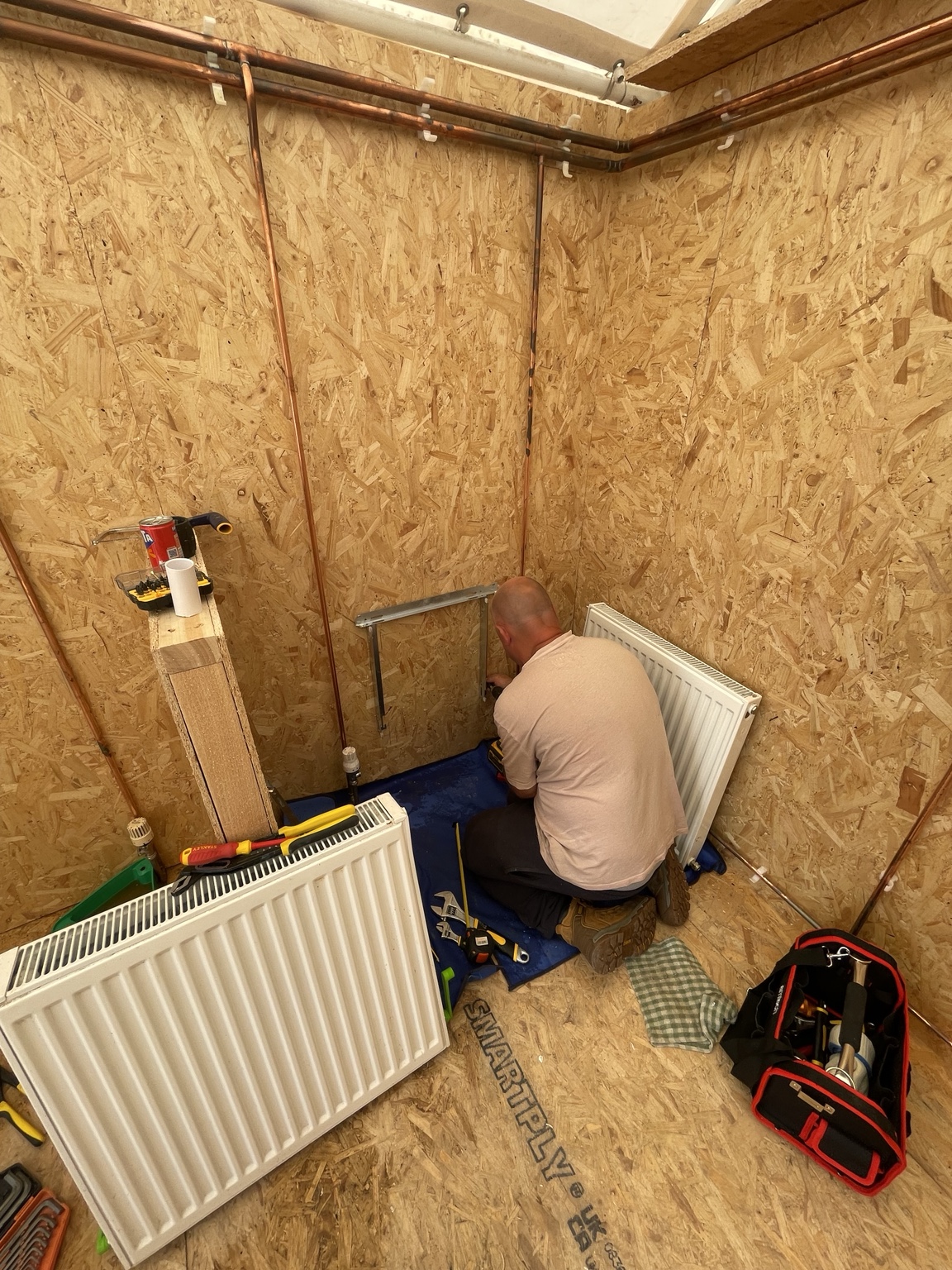
Autumn's creeping in, and the first properly cold evening is when half the country discovers a radiator that's roasting at the bottom and stone cold at the top. That's trapped air, and bleeding it is one of the easiest jobs in plumbing. It's also one people do half-right, then wonder why the cold patch comes back or the boiler pressure has fallen through the floor. Here's the whole job done properly — including the two steps most people skip.
A radiator cold at the top and warm at the bottom has air sitting in it. Air rises above the water, and that top panel gives you nothing. Bleeding fixes it.
A radiator warm at the top and cold at the bottom is a different animal. That's sludge — rust and sediment settled in the bottom of the panel — and no amount of bleeding will shift it. That's a powerflush or chemical clean, a heating engineer's job.
One radiator cold all over while the pipe into it gets hot? Often a stuck pin in the thermostatic valve. More on that below.
1. Heating off, radiators cold. Turn the heating off and wait until everything's cool — half an hour to an hour is about right. Two reasons. Hot water can spit out of the valve and scald you. And with the pump running you're fighting moving water, which is slower, messier and can drag more air into the system than you let out.
2. Start downstairs, furthest from the boiler. Work back towards the boiler room by room, then go upstairs. In a small house the order barely matters, but this is the sequence most heating engineers use.
3. Open the bleed valve. It's at one top corner of the radiator — both corners on some. Towel under it, key on, and turn it slowly anti-clockwise, about a quarter turn. You'll hear the hiss straight away.
4. Wait for water, then stop. Hiss first. Then spit. Then a steady jet of water with no air in it. The moment it runs clean and steady, close the valve — clockwise, hand-tight. No muscles. The seal inside is a small rubber washer, and overtightening is what wrecks them.
5. Repeat around the house. Same routine on every radiator that needs it.
6. Check the boiler pressure. This is the step people forget. Every bit of air you let out leaves the system with less water in it, so bleeding drops the pressure in a sealed system — the kind a combi boiler runs. Look at the gauge when the system is cold: you want it in the 1 to 1.5 bar band. If it's dropped below, top it up with the filling loop — usually a small braided hose under the boiler. Open it, watch the gauge, close it in the band, and check your manual for the figure your manufacturer wants. A boiler left under-pressured can lock out entirely, usually at the worst possible moment.
7. Fire it up and check. Heating back on, wait half an hour, and feel the top of every radiator you bled. Warm from top to bottom means done.
And one to watch: if the pressure keeps sinking over the days after you bleed, that usually means a leak somewhere — occasionally it's a faulty expansion vessel. Stop topping it up and get it looked at — a system that drinks water is telling you something.
You don't need to bleed radiators on a calendar. Do it when the tops go cold. That said, the start of the heating season is the natural moment to walk the house and check every panel does what it's told. Five minutes each, and you head into winter with the heat you're paying for.
Bleeding is the easy end of heating work. Knowing why systems behave the way they do — air, pressure, flow, valves — is what separates a five-minute fix from paying an engineer for something you could have done in your slippers. That understanding is exactly what we build on the 3-Day Complete Plumbing Course (£550 flat, small groups at our Deeside centre): real rigs, real systems, and the judgement to know which jobs are yours. If you want to keep your hand in between jobs, Skills Club on Thursday evenings is £30.
Got a radiator that won't behave, or not sure whether yours is air or sludge? Message me on WhatsApp on 07414 249796 — send a photo and I'll tell you what you're looking at.