By Mike Collins · 22 September 2026
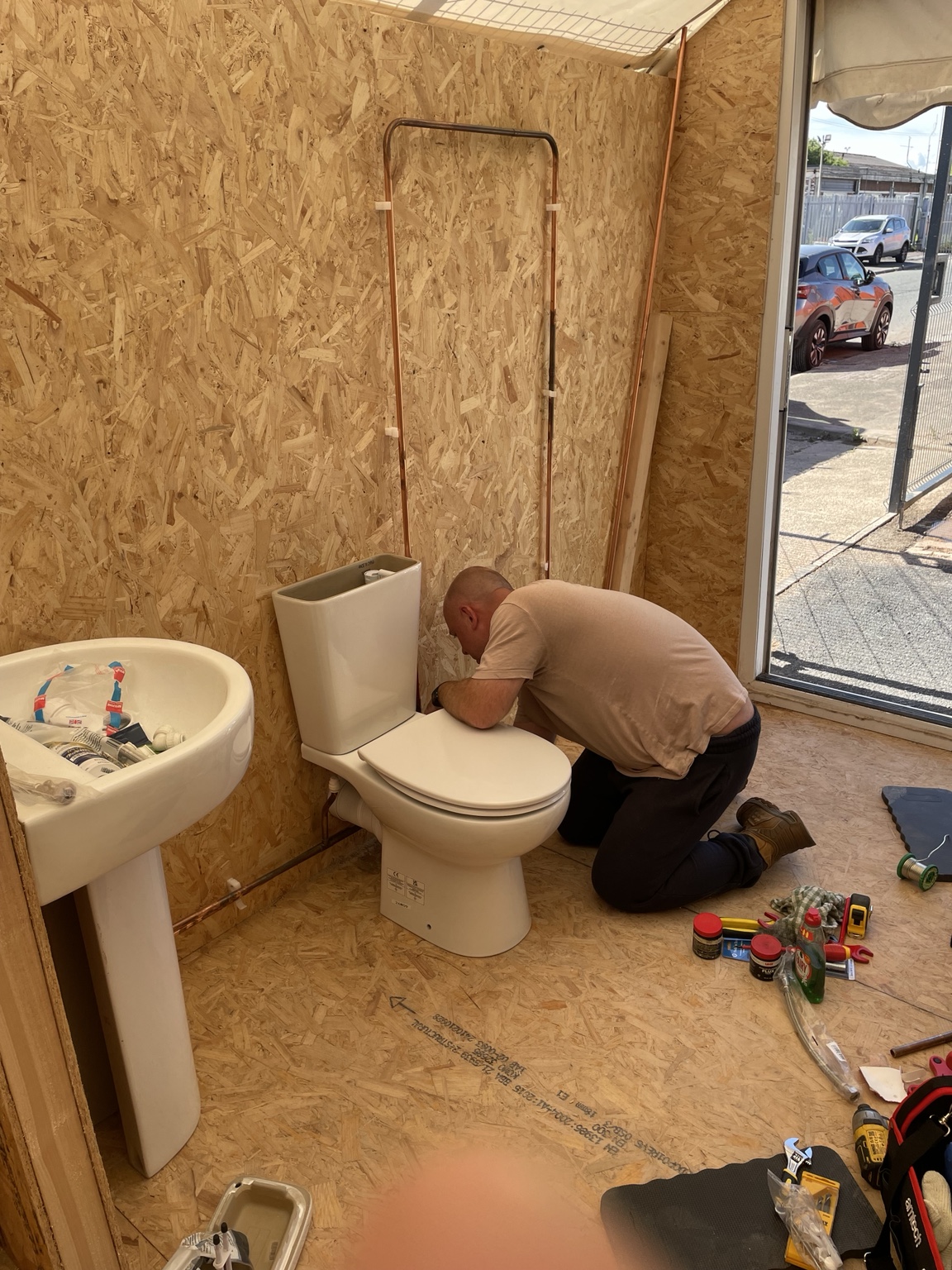
Half the messages that land on my WhatsApp start the same way: "Is this one safe to do myself?" — usually followed by a photo of something half-dismantled under a sink. I like those messages, because most household plumbing is far more DIY-friendly than people think. The real skill was never turning a spanner. It's knowing, before you start, which side of the line the job sits on. So here's the line, drawn as straight as I can.
1. Can I isolate the water to it in under a minute? A working isolation valve on the pipe, or a stopcock that actually turns. If you can't shut it off quickly and you're not 100% sure where it is, stop there and fix that first.
2. Am I swapping like for like? Replacing a tap, a washer, a flush valve, a shower hose — that's a swap. Moving pipework, re-routing a soil stack, redesigning the bathroom — that's a project, and projects are where DIY gets expensive.
3. What happens if it goes wrong halfway through? If the worst case is a wet floor and an hour of mopping, the job is honest. If the worst case is water travelling behind tiles, under a floor or through a ceiling into someone's lounge, the job needs respect.
4. Can I test it properly afterwards? Refill slowly, dry everything with a towel, then check again an hour later and again next morning. If you can't describe how you'd prove the joint isn't weeping, you're not ready for that joint yet.
If all four answers are yes, crack on. Any no isn't a "never" — it's a "learn it first."
Replacing or rewashering taps. Swapping cistern internals and toilet seats. Fitting a shower head or hose. Connecting a washing machine or dishwasher to an existing point. Bleeding a radiator. Re-running a silicone bead around the bath or shower — done right, one of the highest-impact jobs in the house. Fitting an isolation valve on accessible pipework. These pass all four questions: accessible, like-for-like, easy to isolate, and a mistake costs you a towel, not a ceiling.
Swapping a radiator valve. Repairing a length of pipe with compression fittings. Replacing a ball valve or flush valve. Extending a run in push-fit. All reasonable DIY jobs — but each has a technique that separates a tidy job from a weeping one, and technique is exactly what you want to practise on a rig with someone watching, not first-time on your own floor.
One rule worth knowing before push-fit goes anywhere near a boiler: the push-fit makers themselves say the first metre or so from the boiler casing should be copper, and your boiler manual gets the final word. It's in the instructions for a reason — heat and plastic don't negotiate.
Anything on gas. Boilers, gas pipes, gas fires. It's the law: Gas Safe registered engineer, no exceptions. I'd no more talk you through that than I'd teach you to juggle knives.
Unvented hot water cylinders. That gleaming mains-pressure cylinder in the airing cupboard stores hot water under real pressure, and it's covered by Building Regulations part G3 — installation and servicing belong to a G3-qualified engineer, and they should be serviced annually. Not a DIY object, ever.
Shared drains. Since October 2011, drains and sewers serving more than one property transferred to the water companies in England and Wales — so before you pay anyone to clear or repair a shared drain, check whose it is. The gully in your yard, though, is usually yours, and that one's fair game with a pair of rods and some patience.
Work that changes pipework design in a kitchen or bathroom can be notifiable under Building Regulations, and anything hidden behind tiles, floors or cupboards you can't see the run of — both want a proper look from someone who's traced a hundred of them.
Stop. Isolate. Mop up. Photograph what you're looking at. Then ask someone who's seen it before. Almost every disaster I hear about started as a twenty-minute job that quietly grew — a stripped thread, a cracked fitting, a "quick tighten" on something that wasn't a joint. Two minutes to shut the water off beats two weeks of drying out, every single time.
Want the amber jobs moved onto your green list? That's the whole point of the 3-Day Complete Plumbing Course — £550 flat, small groups at our Deeside centre, where you cut, join, isolate and pressure-test on real rigs until the technique is yours. And to keep your hand in afterwards, Skills Club on Thursday evenings is £30.
Got a specific job in mind right now? Message me on WhatsApp on 07414 249796 with a photo of it. You'll get a straight go / learn-first / call-someone answer — no charge, no pressure.